
There’s a certain charm in simplicity that I often find myself drawn to in the kitchen. One evening, as I rummaged through my pantry, I stumbled across some Pecorino Romano and a dusty bag of spaghetti, and that’s when inspiration struck. Enter Cacio e Pepe—a classic Roman dish that has the power to transform humble ingredients into something extraordinary.
With just four key elements—spaghetti, Pecorino Romano cheese, black pepper, and salt—you can craft a dish that’s not only quick to prepare but also bursting with flavor and creamy texture. Imagine twirling al dente noodles, glistening with a silky cheese sauce and adorned with bite-sized peppery surprises.
After a long day, nothing beats the comfort of this satisfying meal that feels like a warm hug on a plate. Whether you’re looking to impress friends at a dinner gathering or simply indulging in a cozy night in, Cacio e Pepe always hits the spot. Join me as we whip up this delightful pasta classic that shows us that, sometimes, less is truly more!
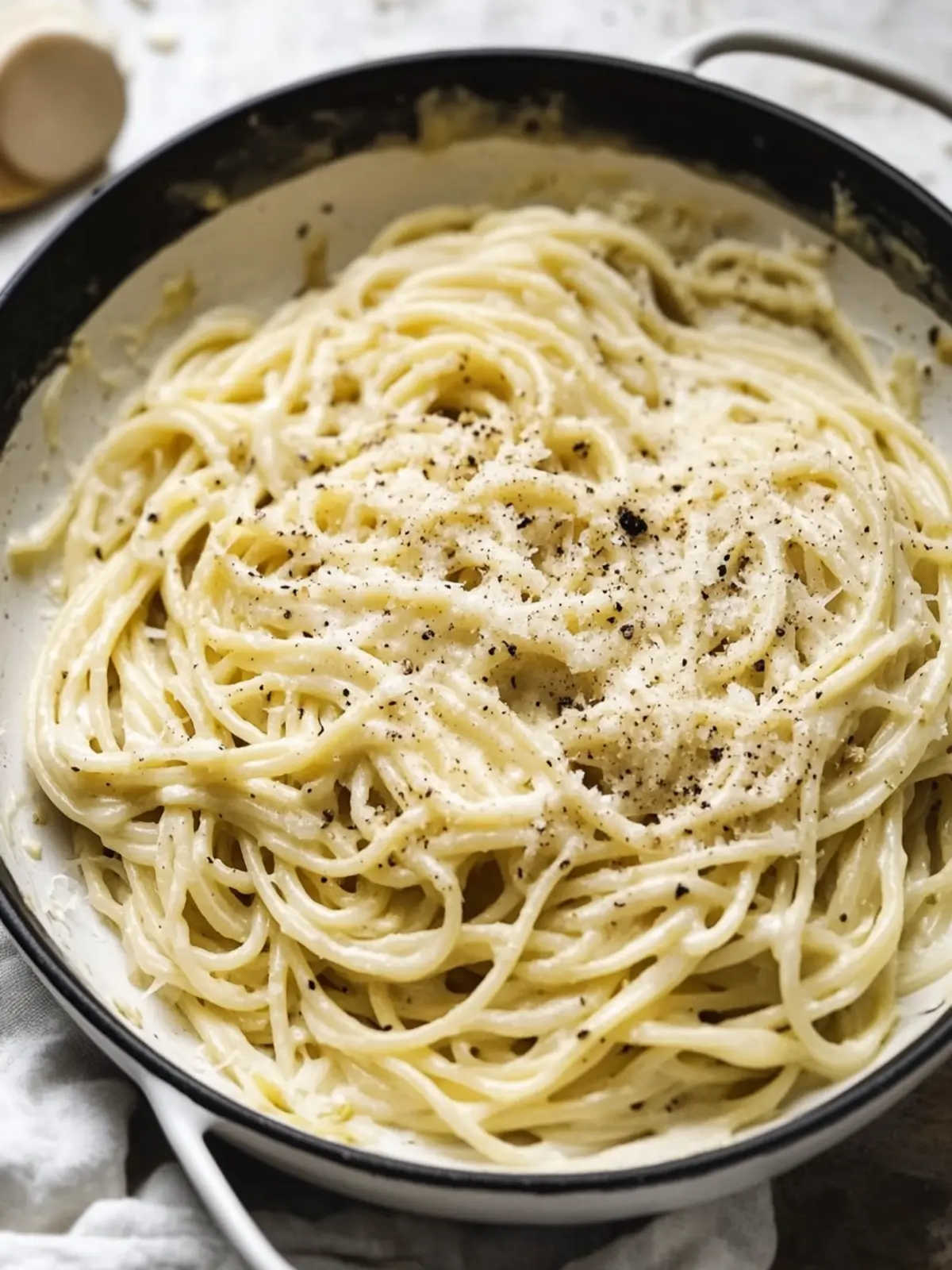
Why is Cacio e Pepe so beloved?
Simplicity takes center stage in this recipe, proving that you don’t need fancy ingredients for a gourmet meal. Flavor-packed with the richness of Pecorino Romano and the warmth of freshly cracked black pepper, every bite is a revelation. Quick and easy, Cacio e Pepe shines with just 8 to 10 minutes of cook time, making it perfect for busy weeknights. Crowd-pleaser status is assured; everyone will be asking for seconds! For those who love a little twist, consider experimenting with creative pasta variations to elevate your dish even further.
Cacio e Pepe Ingredients
Unlock the secret to this classic dish with just a few staple items!
For the Pasta
• Dry spaghetti or bucatini – either works beautifully; bucatini adds an extra bite with its hollow center.
• Kosher salt – essential for enhancing the flavor of your pasta as it cooks.
For the Sauce
• Pecorino Romano cheese – finely grated for a creamy texture; you can substitute with Parmigiano-Reggiano if needed.
• Whole black peppercorns – freshly cracked adds a fragrant punch; pre-ground works in a pinch but lacks the same depth.
Embrace the simplicity of Cacio e Pepe and enjoy a dish that truly highlights each ingredient’s unique flavor!
How to Make Cacio e Pepe
-
Boil the Water:
Bring a large pot halfway full of water to a rolling boil over medium-high heat. This sets the perfect stage for your pasta to cook evenly. -
Toast the Pepper:
In a large skillet, cook 1 1/2 teaspoons of whole black peppercorns over medium heat. Shake the pan occasionally until fragrant and crackling—about 3 minutes. Let cool and coarsely crush them. -
Cook the Pasta:
Add 1 pound of dry spaghetti or bucatini and a few pinches of kosher salt to the boiling water. Cook according to package directions until just al dente, which typically takes around 8 to 10 minutes. -
Grate the Cheese:
Finely grate 4 ounces of Pecorino Romano cheese into a medium heatproof bowl. The more finely grated, the creamier your sauce will be! -
Prepare the Sauce Base:
Before the pasta is fully cooked, transfer 1/2 cup of the cooking water to the skillet with the crushed pepper and bring it to a simmer over medium heat. -
Toss the Pasta:
Using tongs, transfer the al dente pasta to the skillet, letting a bit of water cling to the noodles. Toss it all together for about 2 to 3 minutes until the pasta is well-coated and the water is mostly absorbed. -
Make the Cheese Paste:
Scoop 1/2 cup of cooking water into a measuring cup. Drizzle 1 to 2 tablespoons into the bowl of grated Pecorino and mash with a fork. Keep adding water and mashing until you create a soft cheese paste. -
Combine Pasta and Cheese:
Spoon a quarter of the cheese paste onto the spaghetti and toss quickly until melted. Gradually add more cheese paste, ensuring it blends seamlessly into the pasta. -
Adjust the Sauce:
Add in drizzles of pasta water to adjust the moisture level of the noodles. Use your tongs to break apart any clumps of cheese paste until the pasta is glossy and beautifully coated. -
Finish and Serve:
Once everything is combined and the pasta is lightly sauced, taste and season with additional kosher salt as needed. Serve hot for an experience that’s sure to impress!
Optional: Garnish with extra Pecorino Romano for an added layer of flavor.
Exact quantities are listed in the recipe card below.
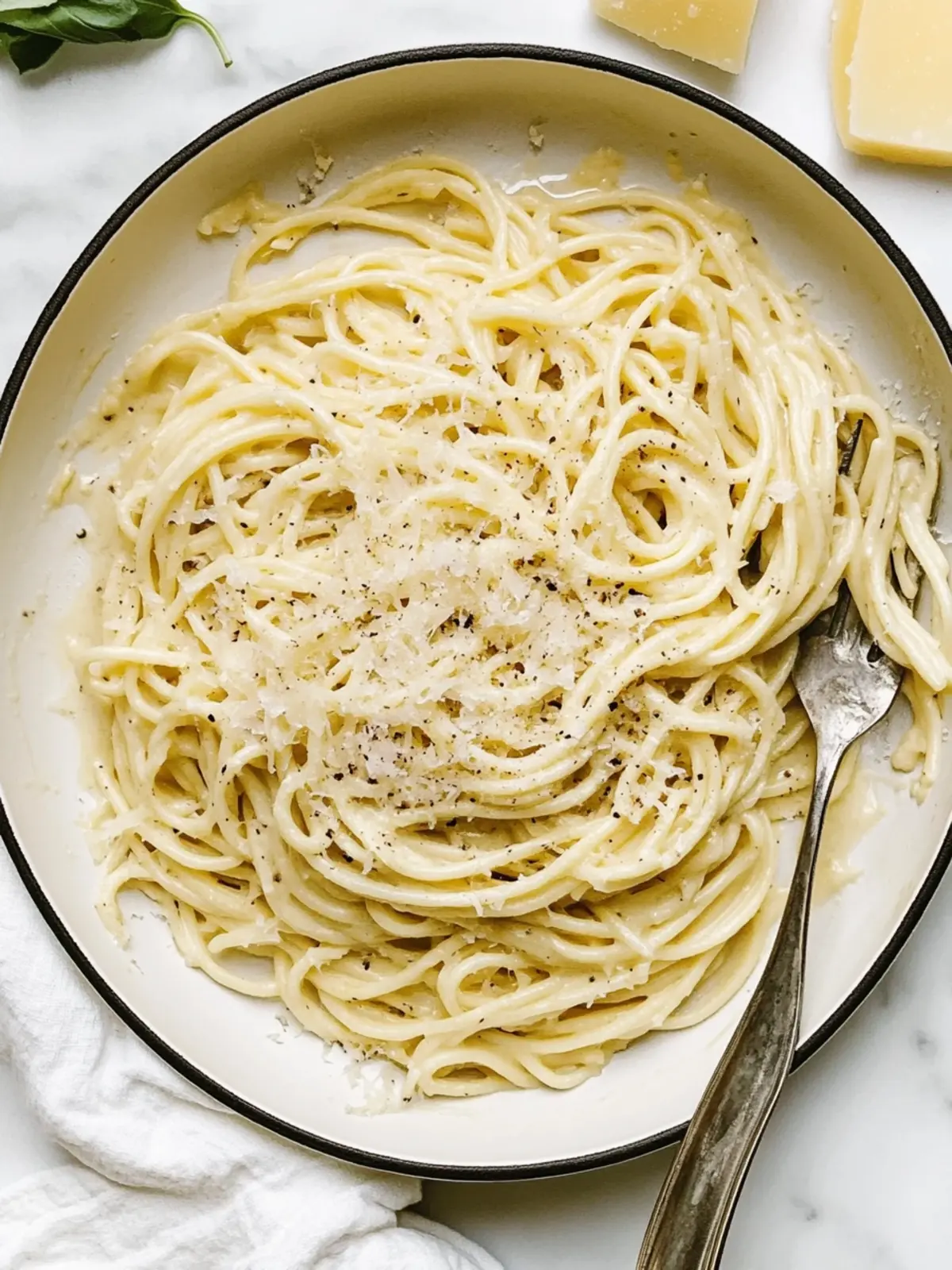
Expert Tips for Cacio e Pepe
- Fresh Ingredients: Use high-quality Pecorino Romano cheese and freshly cracked black pepper for the best flavor. Avoid pre-ground pepper, as it can dull the dish.
- Timing is Key: Keep an eye on your spaghetti cooking time. Aim for al dente to maintain the perfect texture in your Cacio e Pepe.
- Pasta Water Magic: Reserve enough pasta water to adjust your sauce’s consistency. It’s a crucial step for achieving the desired creaminess!
- Proper Tossing: Don’t rush the tossing process. Allow the cheese to melt gradually into the pasta for a smooth, silky sauce.
- Avoid Over-salting: Season with kosher salt at the end, as the Pecorino itself is quite salty. Taste before adding more!
- Experiment Gently: While traditional Cacio e Pepe is delightful as is, feel free to explore toppings like fresh herbs for a unique twist.
How to Store and Freeze Cacio e Pepe
Fridge: Keep leftover Cacio e Pepe in an airtight container for up to 3 days. This will help maintain the texture of the pasta and cheese sauce.
Freezer: While it’s best fresh, you can freeze Cacio e Pepe for up to 2 months. Portion it into freezer-safe containers, noting that the sauce may separate upon thawing.
Reheating: Reheat gently in a skillet over low heat, adding a splash of reserved pasta water to restore creaminess. Avoid microwaving for best results.
What to Serve with Cacio e Pepe?
Complete your meal with delightful accompaniments that complement the rich, creamy flavors of this Italian classic.
-
Garlic Bread: The crunchy texture contrasts beautifully with the silky pasta, adding an aromatic element that everyone loves. Perfect for mopping up every last bite of cheese sauce.
-
Simple Salad: A fresh, crisp arugula salad with a light lemon vinaigrette provides a refreshing balance to the richness of Cacio e Pepe, brightening each mouthful.
-
Roasted Vegetables: Seasonal roasted veggies, like asparagus or Brussels sprouts, add a delightful crunch and earthy flavor that pairs well with the dish’s creaminess.
-
Prosecco: This bubbly Italian sparkling wine complements the dish’s flavors perfectly. Its effervescence cuts through the richness, making each sip and bite feel festive.
-
Panna Cotta: For dessert, a light panna cotta topped with fresh berries will provide a sweet ending that contrasts the savory pasta beautifully.
-
Grilled Shrimp: Tender grilled shrimp tossed with a squeeze of lemon add a luxurious protein option that elevates the dining experience while keeping the meal light and flavorful.
-
Pesto Bruschetta: Creamy mozzarella and basil pesto on toasted bread enhances the Italian flair, making a great appetizer to start your meal with.
-
Zucchini Noodles: For a low-carb alternative, spiralized zucchini tossed with a bit of olive oil and garlic is a fantastic side that won’t overshadow the main dish.
Variations & Substitutions for Cacio e Pepe
Don’t be afraid to put your own spin on this classic dish—there are so many delicious ways to customize it!
-
Gluten-Free: Substitute spaghetti with gluten-free pasta made from rice, quinoa, or lentils for a similar texture.
-
Vegan: Use a vegan cheese alternative, and replace the butter with olive oil for a creamy and dairy-free version.
-
Add Veggies: Toss in some sautéed spinach or arugula just before serving to brighten up the dish with fresh greens.
-
Spicy Kick: Incorporate a pinch of red pepper flakes or some finely chopped fresh chili to add a delightful heat.
-
Nutty Flavor: For an extra layer of flavor, sprinkle in some toasted pine nuts or walnuts for a crunchy contrast.
Transform this classic into your personal favorite by playing around with these variations. Each twist can bring a new experience to your plate, making it fun to enjoy again and again!
Make Ahead Options
Preparing Cacio e Pepe in advance is a game changer for busy home cooks! You can toast the whole black peppercorns and crush them up to 24 hours ahead, storing them in an airtight container to maintain their aromatic freshness. Additionally, grate the Pecorino Romano cheese and keep it refrigerated for up to 3 days. When you’re ready to make this dish, simply follow the cooking steps, adding the pre-prepped components when indicated. Just be sure to boil fresh water for the pasta to ensure it cooks perfectly. With these make-ahead tips, you’ll enjoy this creamy, comforting classic with ease on hectic weeknights!
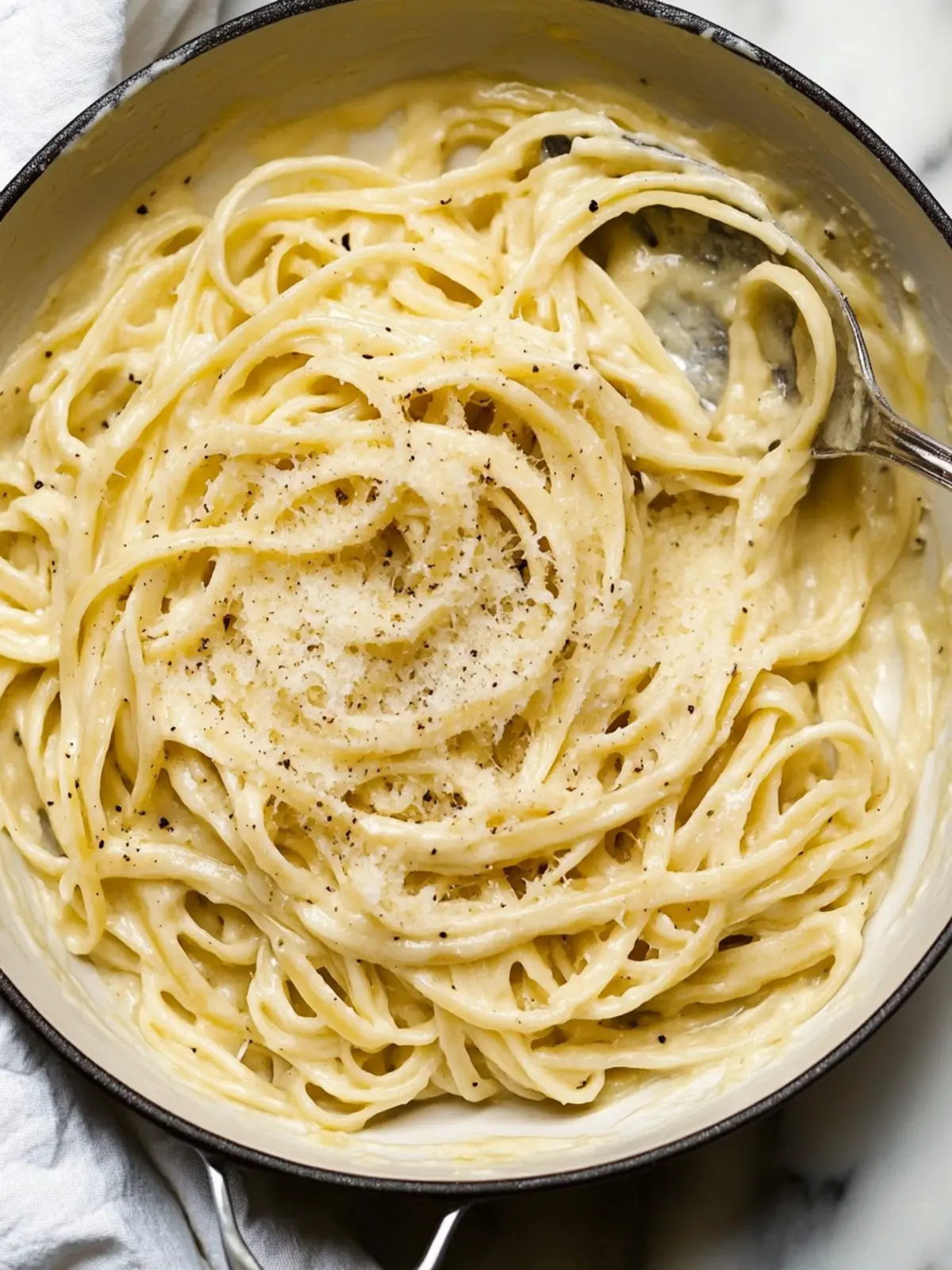
Cacio e Pepe Recipe FAQs
What type of black pepper should I use for Cacio e Pepe?
Using whole black peppercorns is essential for the best flavor! Freshly cracked pepper gives the dish a beautiful aroma and a warming kick. Pre-ground black pepper is convenient, but it won’t provide the same depth of taste in your Cacio e Pepe.
How can I store leftovers of Cacio e Pepe?
Absolutely! Store any leftovers in an airtight container in the fridge for up to 3 days. Just remember to let the pasta cool before sealing to avoid condensation. This keeps the delicious flavors intact while preventing the pasta from becoming mushy.
Can I freeze Cacio e Pepe?
Yes, you can! I recommend portioning leftover Cacio e Pepe into freezer-safe containers. It should keep well for up to 2 months. When you’re ready to enjoy it again, simply thaw it overnight in the fridge and reheat gently on the stove, adding a splash of reserved pasta water to restore creaminess.
What should I do if my sauce is too thick when making Cacio e Pepe?
If you find your sauce is too thick, don’t worry! Gradually add in reserved pasta water in small increments while tossing the pasta. This will help loosen the sauce and give it that desired creamy texture. Remember, you want just enough moisture to coat the noodles without making them soupy!
Can I make Cacio e Pepe dairy-free?
Very much so! You can achieve a similar creamy texture by using a dairy-free cheese alternative. Look for products made from nuts or soy that melt well. Nutritional yeast can also provide a savory, cheesy flavor without the dairy!
Is Cacio e Pepe pet-friendly?
Great question! While Cacio e Pepe is delicious for humans, it’s not suitable for pets due to the high cheese and salt content. Always keep any leftovers out of their reach and choose pet-friendly treats instead!
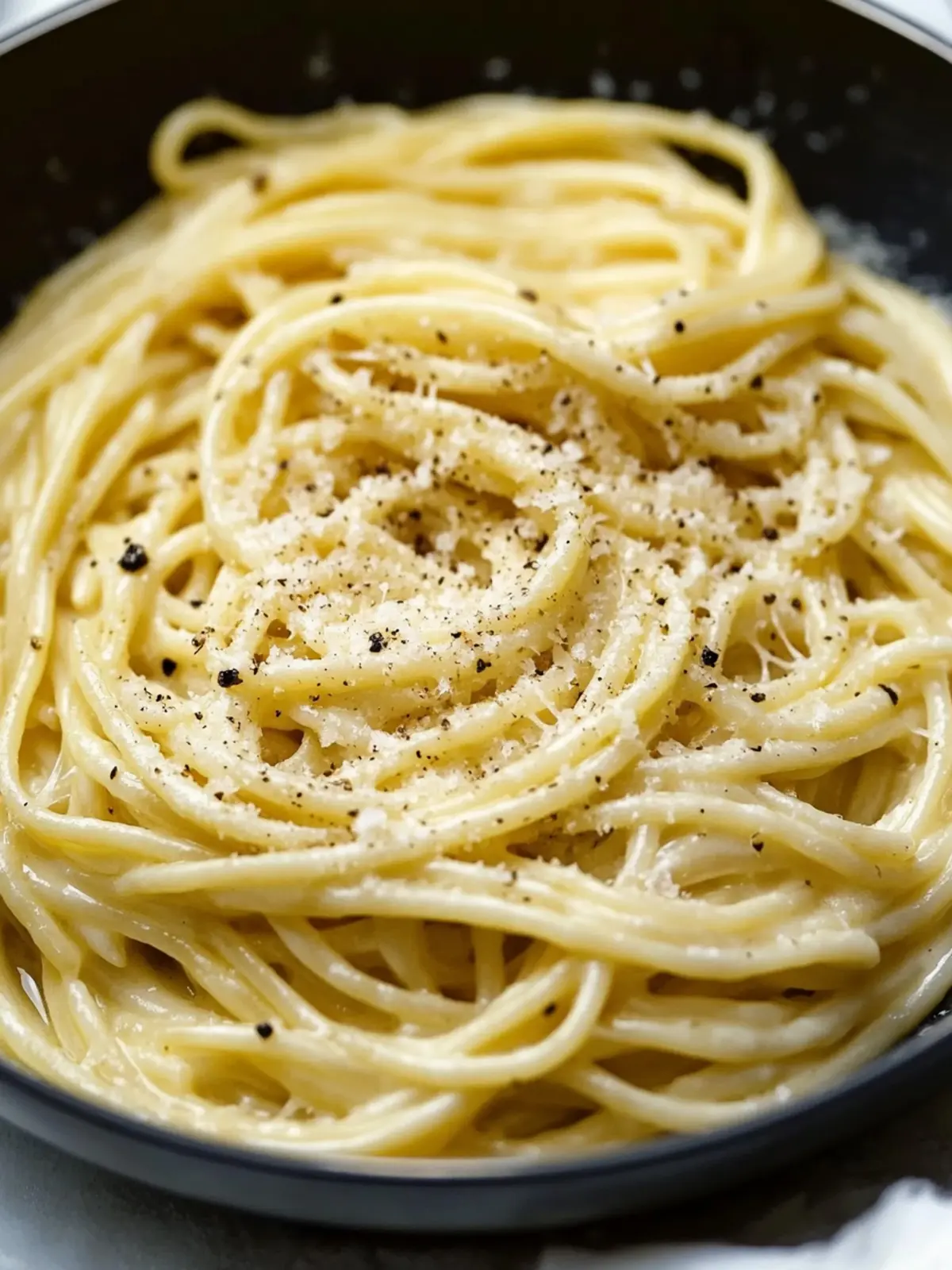
Cacio e Pepe: Elevate Your Pasta Game with This Easy Recipe
Ingredients
Equipment
Method
- Bring a large pot halfway full of water to a rolling boil over medium-high heat.
- In a large skillet, cook the whole black peppercorns over medium heat until fragrant and crackling—about 3 minutes.
- Add the dry spaghetti or bucatini and kosher salt to the boiling water and cook according to package directions until just al dente, around 8 to 10 minutes.
- Finely grate the Pecorino Romano cheese into a medium heatproof bowl.
- Before the pasta is fully cooked, transfer 1/2 cup of the cooking water to the skillet with the crushed pepper and bring it to a simmer over medium heat.
- Using tongs, transfer the al dente pasta to the skillet, letting a bit of water cling to the noodles. Toss for about 2 to 3 minutes until the pasta is well-coated.
- Scoop 1/2 cup of cooking water into a measuring cup and drizzle into the bowl of grated Pecorino, mashing with a fork until a soft cheese paste forms.
- Spoon a quarter of the cheese paste onto the pasta and toss until melted. Gradually add more cheese paste, ensuring it blends seamlessly into the pasta.
- Add drizzles of pasta water to adjust the moisture level and break apart any clumps of cheese paste until the pasta is glossy.
- Taste and season with additional kosher salt as needed before serving hot.