
The first time I tasted Gyudon, the delightful Japanese beef rice bowl, I was transported straight to a bustling Tokyo eatery. The harmony of savory beef, tender onions, and fragrant dashi was unlike anything I had ever experienced. It’s amazing how a single dish can evoke such memories and sensations! When I found myself craving something comforting yet vibrant, this recipe became my go-to.
With just a handful of ingredients and a mere ten minutes of cooking, you’ll discover that Gyudon is not only incredibly easy to prepare but also a flavor-packed meal that can bring some excitement back to your dining routine. The umami-rich sauce, paired with perfectly cooked Japanese short-grain rice, creates a delicious foundation that both satisfies and impresses. Plus, who can resist the brightly colored garnish of pickled ginger?
Whether you’re looking to spice up your workweek meals or impress guests at your next dinner party, this Gyudon recipe is sure to become a beloved favorite in your kitchen. Let’s dive into how you can recreate this savory sensation at home!

Why is Gyudon so Special?
Quick and Easy: This Gyudon recipe comes together in just 10 minutes, making it perfect for busy weeknights.
Savory Layers: The rich umami flavors from the dashi and beef create a luscious sauce that elevates every bite.
Healthful Ingredients: Packed with protein and a hint of sweetness, it’s a satisfying meal that feels indulgent without the guilt.
Versatile Dish: Serve it with or without the optional eggs, and customize with your favorite toppings for a personalized touch.
Crowd-Pleasing Comfort: It’s the ultimate comfort food that appeals to everyone, whether you’re feeding the family or hosting friends.
Join us as we explore how to make this restaurant-quality dish at home, and take a look at our other amazing Japanese dishes for more culinary inspiration!
Gyudon Ingredients
• Discover what makes this Gyudon so flavorful with our simple list!
For the Base
- ½ onion (4 oz, 113 g) – Sautéing this onion adds sweetness and depth to the dish.
- 1 green onion/scallion – A fresh, vibrant garnish that enhances the overall flavor profile.
For the Beef
- ½ lb thinly sliced beef (such as ribeye) – Choose ribeye for its marbling and rich taste, making each bite delectably tender.
For the Broth
- ½ cup dashi (Japanese soup stock) – This umami-rich stock is essential for authentic flavor.
- 2 Tbsp sake – Adds a subtle sweetness and complexity to the broth.
- 2 Tbsp mirin – Provides a lovely sweetness that balances the saltiness.
- 3 Tbsp soy sauce – A key ingredient that contributes umami and saltiness.
- 1 Tbsp sugar (to taste) – Adjust to your preference for added sweetness.
For Serving
- 2 servings cooked Japanese short-grain rice – This rice is perfect for soaking up the delicious sauce.
- pickled red ginger (beni shoga or kizami beni shoga) – A tangy and colorful garnish that adds a nice contrast to the savory components.
Gather these ingredients and get ready to create a delightful Gyudon that will have everyone asking for seconds!
How to Make Gyudon
-
Gather all the ingredients. If you want smoother slicing, place the thinly sliced beef in the freezer for about 10 minutes to firm it up.
-
Slice the ½ onion into thin pieces. This will add sweetness as it cooks and infuses your Gyudon with a lovely aroma.
-
Cut the green onion/scallion diagonally into thin slices and set this cheerful garnish aside for later.
-
Prepare the beef by removing it from the freezer and cutting it into 3-inch (7.6 cm) wide pieces—this ensures everyone gets a delicious bite!
-
Combine the broth ingredients in a large frying pan. Mix together ½ cup dashi, 2 Tbsp sake, 2 Tbsp mirin, 3 Tbsp soy sauce, and 1 Tbsp sugar, stirring until well blended and the sugar dissolves.
-
Add the onion slices to the pan, spreading them evenly throughout the broth so they soften beautifully.
-
Place the beef evenly on top of the onions, ensuring they are covered. This helps them cook perfectly in the flavorful broth beneath.
-
Cover the pan with a lid and turn the heat to medium. Cook until the mixture simmers, then reduce the heat to low and let it cook covered for 3–4 minutes.
-
Skim off any scum and fat from the broth using a fine-mesh skimmer as needed—this keeps your Gyudon flavorful and clean.
-
Sprinkle the sliced green onions on top and cook covered for an additional minute. If you’d like, you can add beaten eggs for a creamy texture at this stage.
-
Serve by dividing 2 servings of cooked rice into large donburi bowls. Drizzle with some delicious pan sauce on top for that extra wow factor!
-
Top with the beef and onion mixture, adding any remaining sauce for flavor, and finish with a sprinkle of pickled red ginger for a pop of color and tang.
Optional: A sprinkle of sesame seeds adds a nice crunch!
Exact quantities are listed in the recipe card below.

Expert Tips for Gyudon
-
Slice Thinly: Use a sharp knife to slice the beef and onion thinly. This helps them cook quickly and absorb the flavorful broth, ensuring a tender Gyudon.
-
Skim the Broth: Skimming off any scum and fat during cooking keeps your Gyudon clear and enhances the dish’s overall flavor.
-
Customize Flavor: Feel free to adjust the sugar or soy sauce to match your taste. A little extra sweetness can elevate the dish without overpowering the savoriness.
-
Serve with Rice: Make sure to use Japanese short-grain rice, as its stickiness helps hold the sauce and enhances the experience of each bite in your Gyudon.
-
Don’t Rush: Allowing the beef to simmer covered for the recommended time lets it soak up the umami-rich broth, making the dish more flavorful and satisfying.
Gyudon Variations & Substitutions
Get creative with your Gyudon and make it your own with these delightful twists!
- Vegetarian: Use shiitake mushrooms or seitan instead of beef for a plant-based option that retains fabulous flavor.
- Spicy: Add a teaspoon of chili paste or some sliced jalapeños for a kick that takes your Gyudon to a whole new level.
- Gluten-Free: Substitute soy sauce with tamari or coconut aminos to make this dish gluten-free without sacrificing taste.
- Extra Veggies: Toss in some sliced bell peppers or bok choy for added freshness and color; they’ll cook beautifully in the broth.
- Rice Alternative: Swap Japanese short-grain rice with quinoa or cauliflower rice for a lighter, low-carb variation that’s still satisfying.
- Miso Twist: Mix a tablespoon of miso paste into the broth for a deeper umami flavor that enriches every bite.
- Citrus Zing: Add a splash of lemon or yuzu juice before serving to brighten and enhance the dish’s savory elements.
- Onion Variety: Experiment with different onions, like shallots or sweet onions, for a nuanced flavor that adds character to your Gyudon.
These simple variations invite you to explore and personalize your Gyudon experience, making each bite unique and delicious!
How to Store and Freeze Gyudon
Fridge: Store leftover Gyudon in an airtight container in the refrigerator for up to 3 days. This helps preserve its delicious flavors and prevents spoilage.
Freezer: Gyudon can be frozen for up to 2 months. To freeze, make sure to cool it completely before transferring it to a freezer-safe container.
Reheating: Reheat frozen Gyudon in a pot over low heat, adding a splash of water or dashi to prevent it from drying out. You can warm it up on the stove or in the microwave.
Storage Tip: For best results, keep the rice separate from the beef mixture if you plan on storing them. This keeps the rice from getting soggy and ensures a delightful taste when you enjoy your homemade Gyudon again!
Make Ahead Options
These Gyudon (Japanese Beef Rice Bowl) make-ahead options are perfect for busy home cooks looking to save time during hectic weeknights! You can slice the onions and prepare the beef up to 24 hours in advance; just refrigerate them in separate airtight containers to maintain their freshness. The dashi broth ingredients can also be mixed and stored, allowing you to whip up this delicious meal in minutes when you’re ready to serve. When it’s time to enjoy, simply combine everything in a pan, follow the cooking directions, and you’ll have a comforting, flavorful Gyudon on the table with minimal effort!
What to Serve with Gyudon?
When creating a delightful meal around Gyudon, consider these pairings to elevate your dining experience and satisfy every palate.
-
Crispy Tempura: The light, crunchy texture of tempura vegetables or shrimp contrasts beautifully with the savory beef and rice, adding a fun element to your meal.
-
Miso Soup: This warm, comforting soup offers a probiotic boost and complements the flavors of Gyudon without overpowering them.
-
Cold Soba Noodles: These chilled noodles provide a refreshing taste and are perfect for dipping in a savory sauce, creating a dynamic flavor experience alongside the hot Gyudon.
-
Japanese Pickles: Assorted tsukemono add a delightful crunch and tang that cuts through the richness of the beef, providing a balance of flavors.
-
Steamed Broccoli: Bright green broccoli adds a nutritious pop of color and a subtle crunch, contrasting the soft textures of the Gyudon.
-
Green Tea: A warm cup of lightly brewed green tea enhances the meal with its earthy notes, while its antioxidants promote health as you enjoy your Gyudon.
Gyudon truly shines when paired with these dishes, creating a tapestry of flavors and textures that will delight your taste buds. Enjoy the balance of comforting warmth and vibrant freshness!
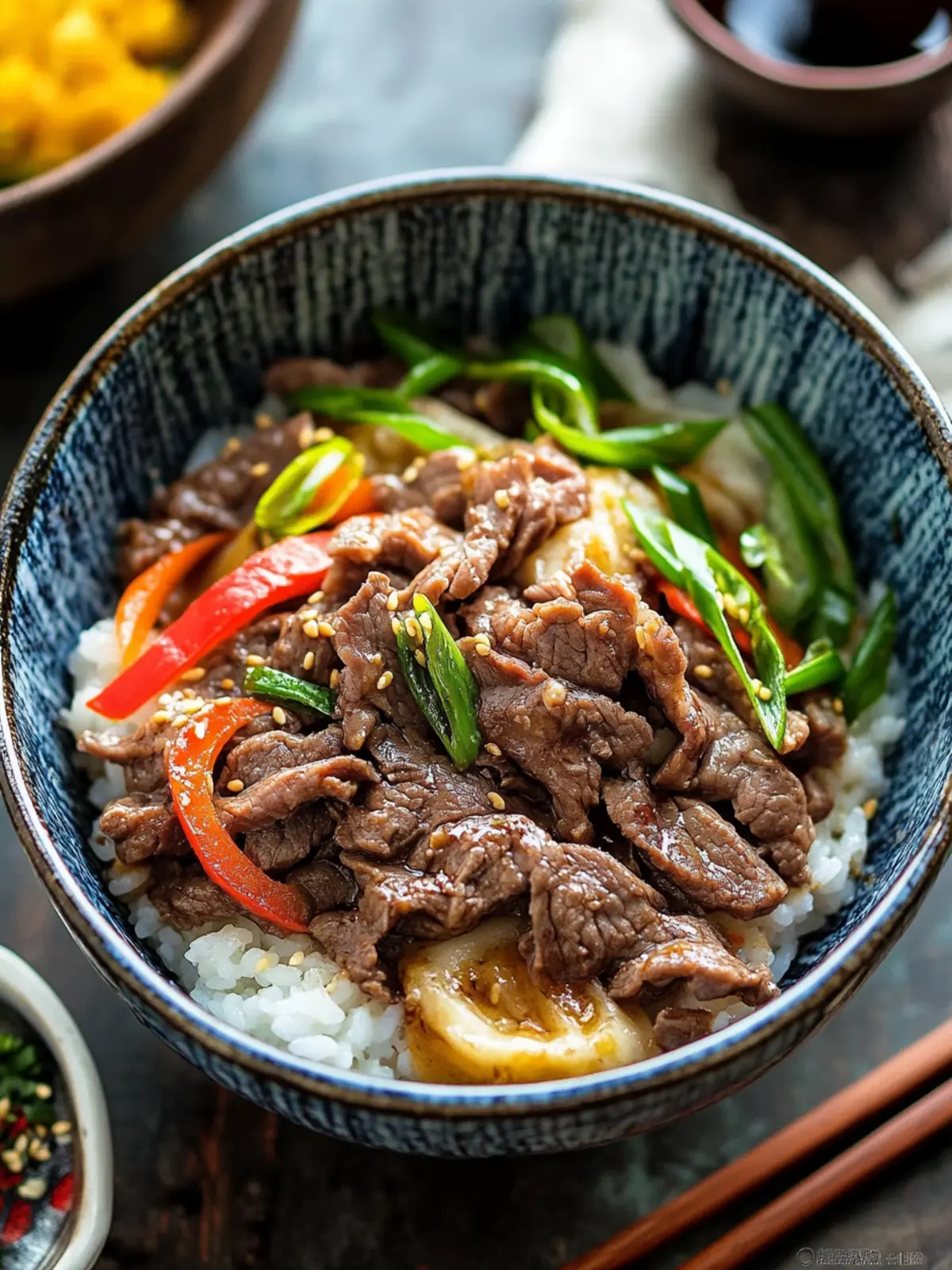
Gyudon (Japanese Beef Rice Bowl) Recipe FAQs
How do I choose the right beef for Gyudon?
Absolutely! For the best flavor and tenderness in your Gyudon, I recommend using thinly sliced ribeye. Look for cuts that have good marbling, as the fat will melt during cooking, infusing the dish with rich flavor. If ribeye isn’t available, other tender cuts like sirloin or chuck eye can also work; just make sure they are sliced thinly.
What’s the best way to store leftover Gyudon?
Very important! Store leftover Gyudon in an airtight container in the refrigerator for up to 3 days. To keep it fresh, ensure it is cooled completely before putting it in the fridge. This also helps to maintain the vibrant flavors of the dish!
Can I freeze Gyudon? If so, how?
Absolutely! Gyudon can be frozen for up to 2 months. To do so, cool the dish completely and then transfer it to a freezer-safe container or freezer bag. Before sealing, try to remove as much air as possible. To reheat, simply warm it in a pot over low heat, adding a splash of water or dashi to keep it moist.
What if my Gyudon broth is too salty?
If you find your broth is too salty, don’t panic! You can add a bit of sugar to help balance the flavors. Start with a teaspoon and taste as you go, mixing well. If needed, adding a splash of water or extra dashi can dilute the saltiness without losing the overall flavor.
Are there any dietary considerations for Gyudon?
The more the merrier! If you’re catering to dietary restrictions, you can certainly make variations. For gluten-free options, use tamari instead of soy sauce. Vegetarian or vegan? Substitute the beef with mushrooms (like shiitake) and use vegetable broth in place of dashi for a delicious twist. Always check for allergies, especially with the garnishes like pickled ginger!
How do I know when my Gyudon is done cooking?
Great question! Your Gyudon is ready once the beef is tender and has absorbed the broth flavors—this usually takes about 3–4 minutes of simmering. If you’re using a meat thermometer, aim for 145°F (63°C) for medium-rare beef. Remember to skim off any excess fat or scum from the top, ensuring a clean and delicious final dish!
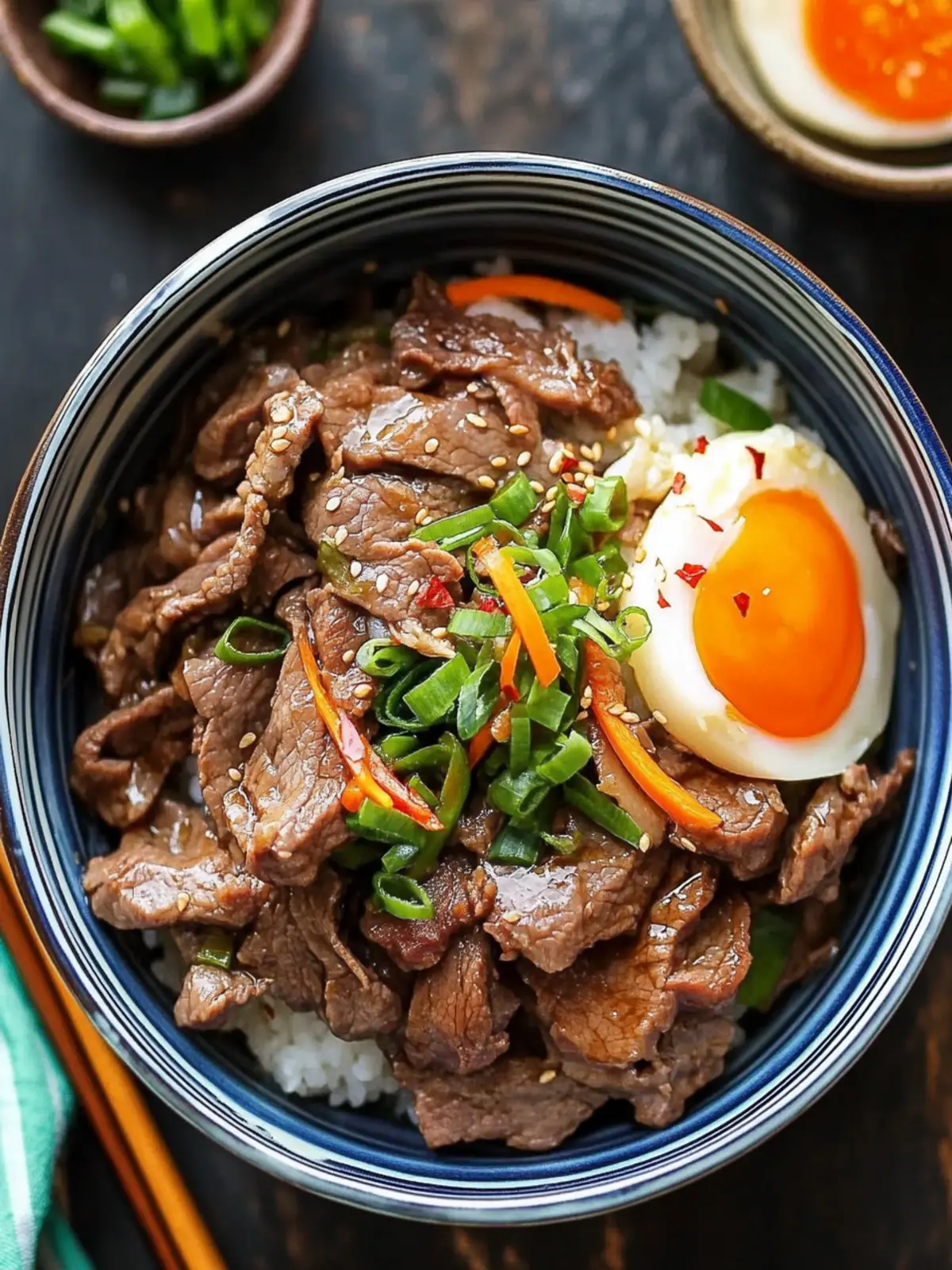
Irresistible Gyudon Japanese Beef Rice Bowl You’ll Love
Ingredients
Equipment
Method
- Gather all the ingredients. If you want smoother slicing, place the thinly sliced beef in the freezer for about 10 minutes to firm it up.
- Slice the onion into thin pieces.
- Cut the green onion/scallion diagonally into thin slices and set aside.
- Prepare the beef by cutting it into 3-inch wide pieces.
- Combine the broth ingredients in a frying pan.
- Add the onion slices to the pan.
- Place the beef evenly on top of the onions.
- Cover the pan with a lid and turn the heat to medium.
- Cook until the mixture simmers, then reduce the heat to low and let it cook covered for 3–4 minutes.
- Skim off any scum and fat from the broth as needed.
- Sprinkle the sliced green onions on top and cook covered for an additional minute.
- Serve by dividing the rice into bowls, drizzling with pan sauce, and topping with the beef and onion mixture.
- Finish with a sprinkle of pickled red ginger.