
As the chilly evening air creeps in, there’s nothing quite as comforting as a warm bowl of Oyakodon, the beloved Japanese chicken and egg rice bowl that feels like a warm hug. The moment you crack those fresh eggs and watch them gently mingle with tender chicken and sweet-salty dashi, you know something special is unfolding. This dish is not just about satisfying your hunger; it’s about creating a cozy atmosphere that beckons you to unwind after a long day.
I first discovered Oyakodon during a rainy afternoon when I was searching for something quick yet hearty to warm my soul. Little did I know that this simple combination of ingredients would soon become a staple in my home. With its balance of flavors and a sprinkle of fresh herbs, this meal effortlessly bridges the gap between comfort food and elegant dining.
Whether you’re tired of takeout or simply craving something homemade, let’s dive into this delightful recipe that will have you saying goodbye to fast food and hello to culinary bliss!

Why is Oyakodon a must-try dish?
Comforting warmth: Oyakodon wraps you in a cozy embrace, making it perfect for chilly evenings.
Quick and easy: This recipe comes together in a flash, allowing you to enjoy homemade goodness without spending hours in the kitchen.
Savory and satisfying: The combination of tender chicken and creamy eggs with a sweet-savory sauce creates an irresistible flavor profile.
Versatile: Customize it to your liking; add seasonal veggies or load it with your favorite toppings.
Crowd-pleaser: Impress your loved ones with this traditional Japanese dish that’s sure to become a family favorite.
Perfect for any occasion: Whether it’s a weeknight dinner or a special gathering, Oyakodon fits the bill for any mealtime!
Oyakodon Ingredients
For the Chicken and Sauce
• Chicken thigh – skinless is best for a tender texture.
• Sake – adds a touch of depth; you can substitute with dry white wine if needed.
• Sugar – just a pinch balances out the flavors beautifully.
• Potato starch – optional, but it helps thicken the sauce nicely.
• Salt – enhances the savory flavor of the dish.
For the Vegetables and Eggs
• Onion – thinly sliced; it brings sweetness that complements the chicken.
• Eggs – use large eggs for a rich, creamy finish.
• Dashi stock – this is essential for that authentic Oyakodon taste; consider homemade or instant!
• Soy sauce – adds depth and umami to the dish.
• Mirin – a sweet rice wine that enhances the sauce’s flavor profile.
• Sugar – a second dose for balancing the soy and mirin.
For Serving
• Cooked rice – short-grain rice works best for a satisfying base.
• Nori – a touch adds a delightful umami flavor.
• Mitsuba or scallions – fresh herbs elevate the taste and presentation.
• Egg yolk – adds creaminess right before serving.
• Schimi togarashi – for a little kick.
• Japanese sansho pepper – optional, but it brings an earthy note that complements the dish.
With these ingredients, you’ll soon be enjoying homemade Oyakodon, a delicious Japanese chicken and egg rice bowl that’s sure to satisfy!
How to Make Oyakodon
-
Prepare the Chicken: Cut the chicken into 2-3 cm wide pieces, slicing against the grain for tenderness. Season it with sugar, sake, and salt, then toss with potato starch. Allow it to rest for 15-30 minutes to absorb flavors.
-
Mix the Eggs: Crack the eggs into a bowl and gently cut through the egg whites without whisking. This technique ensures a lovely texture when cooked, keeping the yolks intact.
-
Sauté the Onions and Chicken: Thinly slice the onion. In a pan, combine dashi, mirin, sugar, onions, and the seasoned chicken. Heat over medium until it simmers, then reduce to medium low heat.
-
Cook the Chicken: Flip the chicken pieces, add soy sauce, and simmer for 2-3 minutes until the chicken is no longer pink and tender. The aroma will be irresistible!
-
Add the First Eggs: Drizzle about 2/3 of the egg mixture gently over the chicken. Reduce the heat and cook uncovered for about 30 seconds, or until the egg whites are just set but still silky.
-
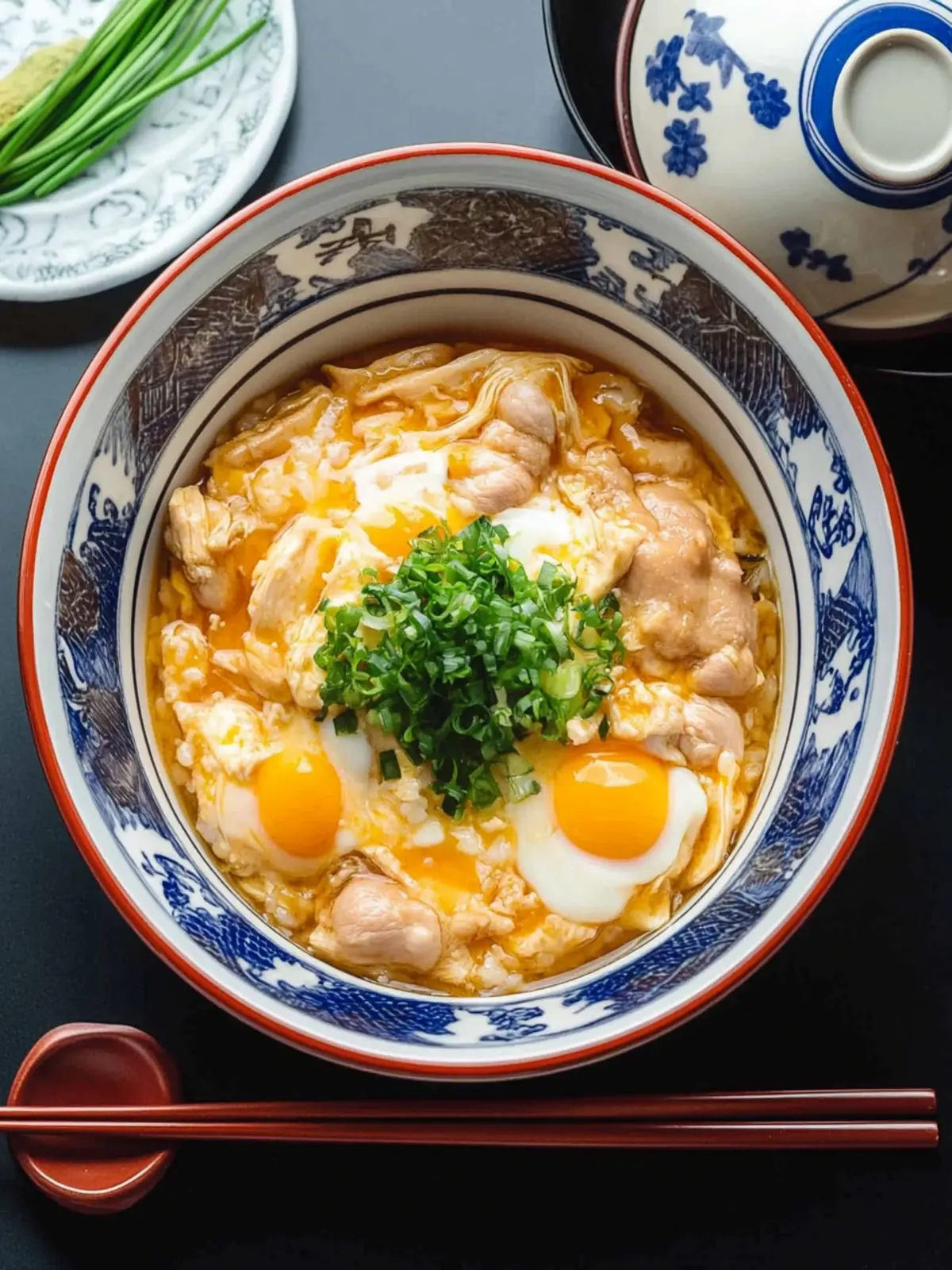
Finish Cooking Eggs: Pour in the remaining eggs and add mitsuba if using. Cook for another 10-20 seconds, until the eggs are done to your preference—creamy or slightly firmer.
-
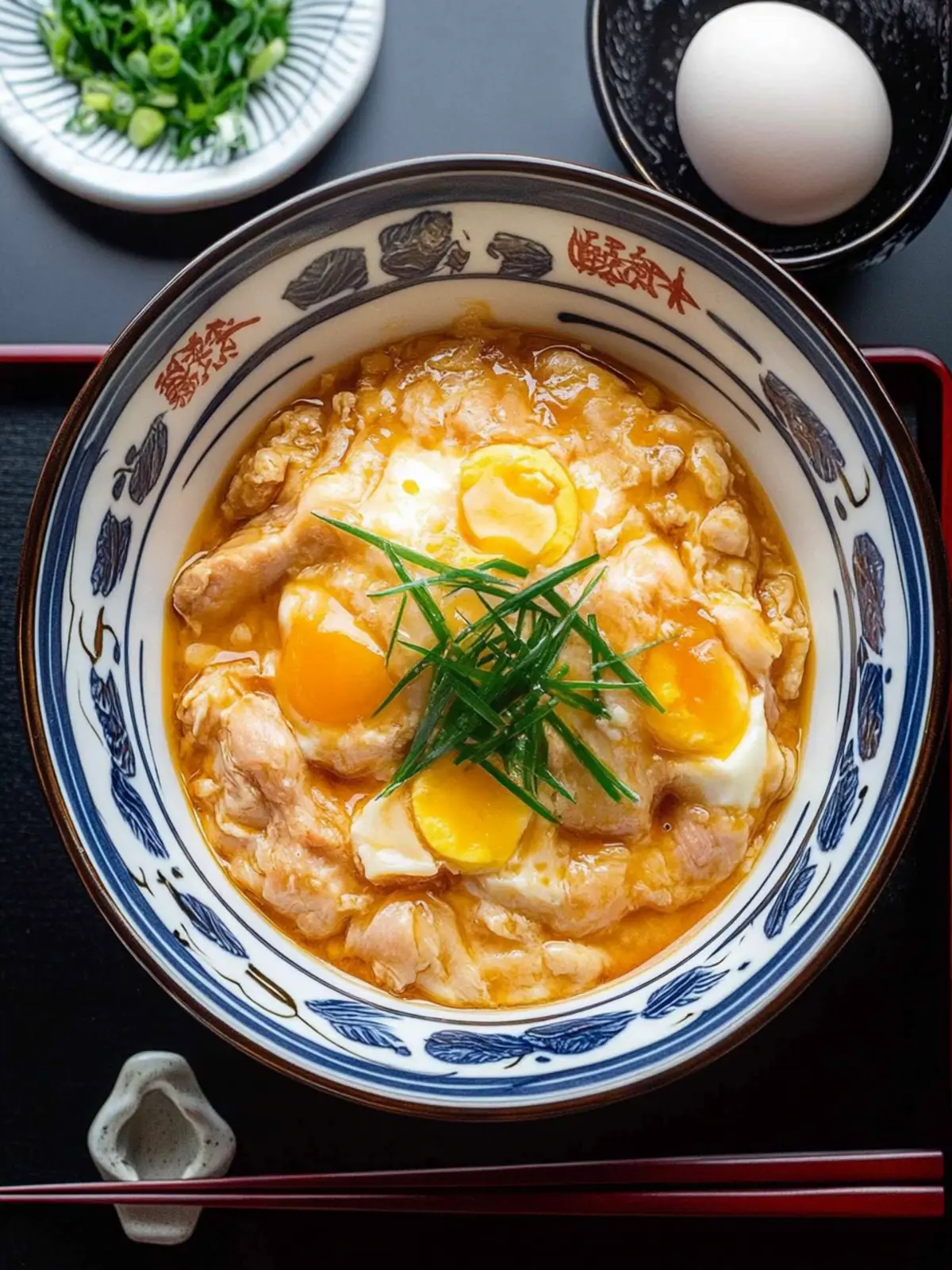
Assemble Your Bowl: Prepare a bowl of rice, place a piece of nori on top, and carefully slide the chicken and egg mixture over it. Add the extra yolk and garnish with green onions, schimi togarashi, and a sprinkle of sansho pepper for an explosion of flavor.
Optional: Add pickled ginger for an extra tangy kick!
Exact quantities are listed in the recipe card below.
What to Serve with Oyakodon?
As you prepare this delightful Japanese chicken and egg rice bowl, it’s a wonderful time to think about delectable sides that will elevate your meal experience.
-
Steamed Broccoli: This vibrant green vegetable adds a fresh crunch and a splash of color to your plate, balancing the richness of Oyakodon.
-
Pickled Vegetables: A variety like tsukemono can brighten your palate, providing a tangy contrast that complements the savory flavors beautifully.
Imagine the satisfying crunch of these tangy bites next to your creamy bowl of Oyakodon, creating a multi-textured meal that dances with every bite.
-
Miso Soup: Warm, savory miso soup pairs perfectly as a light starter, enhancing the umami experience before diving into the heartiness of Oyakodon.
-
Japanese Cucumber Salad: Crisp cucumbers dressed in rice vinegar bring a refreshing burst of flavor, making each bite of Oyakodon even more enjoyable.
Spice things up with a little sesame oil for a nuttiness that enhances the overall meal.
-
Green Tea: This soothing beverage complements the dish seamlessly while aiding digestion, making it an excellent choice for a cozy dinner.
-
Mochi Ice Cream: For dessert, indulge in sweet mochi ice cream to round off your meal with a delightful texture and sweetness that contrasts wonderfully with Oyakodon.
These pairings create a warm, inviting dinner spread that invites everyone to savor the comfort and authenticity of homemade Japanese cuisine.
Make Ahead Options
Oyakodon is a fantastic choice for meal prep, as many components can easily be prepared ahead of time! You can marinate the chicken with sake, sugar, and salt up to 24 hours in advance, sealing it in an airtight container in the fridge to keep it juicy and flavorful. Additionally, you can pre-slice the onions and store them in the refrigerator for up to 3 days. When you’re ready to enjoy your Oyakodon, simply cook the marinated chicken and onions in dashi, then drizzle your eggs as instructed. This way, your homemade meal will still taste just as delicious while saving you precious time during busy weeknights!
How to Store and Freeze Oyakodon
Fridge: Store leftover Oyakodon in an airtight container for up to 3 days. Reheat gently on the stove or in the microwave until warmed through.
Freezer: While Oyakodon is best enjoyed fresh, you can freeze the chicken and egg mixture separately from the rice for up to 1 month. Thaw in the fridge before reheating.
Rice Storage: If you have leftover rice, keep it in an airtight container in the fridge for up to 5 days. Reheat on the stove or microwave, adding a splash of water for moisture.
Reheating Tips: For best results, gently reheat the chicken and egg mixture on low heat to avoid overcooking. Serve it fresh over warm rice for a delicious meal anytime!
Expert Tips for Oyakodon
-
Chicken Selection: Choose skinless chicken thighs for juiciness. Avoid overcooking to keep them tender and flavorful.
-
Egg Technique: Gently cut the egg whites without whisking to retain a lovely texture. This will prevent rubbery eggs and maintain a creamy consistency.
-
Dashi Quality: Use high-quality dashi stock for the best flavor. Homemade or premium instant stock can make a significant difference in your Oyakodon.
-
Heat Control: Keep the temperature moderate to low when adding eggs; this ensures they set gently and remain silky. High heat might scramble them.
-
Personal Touch: Feel free to customize with your favorite herbs or seasonal vegetables. Adding fresh mitsuba or scallions brightens up the dish while enhancing flavors.
-
Serving Style: Serve immediately after cooking for optimum freshness, garnishing with schimi togarashi and sansho pepper for an authentic taste of Oyakodon.
Oyakodon Variations & Substitutions
Feel free to get creative and make this Oyakodon your own with these tasty twists!
-
Vegetarian: Swap chicken for diced tofu or tempeh; sauté until golden for a plant-based delight.
A sprinkle of salt and a dash of soy sauce will help infuse flavor into the tofu, making it just as satisfying. -
Gluten-Free: Use tamari instead of soy sauce to keep your dish gluten-free while retaining that umami flavor.
-
Extra Veggie Boost: Add thin slices of shiitake mushrooms or bell peppers to the onion for added texture and nutrition.
The earthy taste of the mushrooms pairs beautifully with the savory sauce, making every bite a delight. -
Spicy Kick: For those who love heat, incorporate sliced jalapeños or a spoonful of chili oil into the mix.
Just a touch will elevate your Oyakodon, adding a fiery dimension that makes it even more exciting. -
Herb Infusion: Substitute mitsuba with fresh cilantro or basil to give your dish a different but equally refreshing flavor profile.
The right herbs can completely change the experience, taking your taste buds on an unexpected journey. -
Creamier Eggs: Use 3 eggs instead of 2 for a richer, fluffier texture that coats the chicken wonderfully.
The added creaminess brings comfort to every mouthful, making it a delicious choice for egg lovers. -
Seafood Twist: Replace chicken with shrimp or diced fish for a surf-and-turf variation that’s equally enchanting.
Cooking seafood requires less time, so keep an eye on it to ensure it remains tender and flavorful. -
Nutrient-Dense Brown Rice: Swap white rice for brown rice or quinoa for added fiber and a hearty bite.
This substitution will enrich the dish, keeping you full longer and providing a wonderful nutty flavor.
Oyakodon Recipe FAQs
How do I choose the right chicken for Oyakodon?
Absolutely! For a tender and juicy Oyakodon, skinless chicken thighs are the best option. They offer rich flavor while keeping everything moist. Look for thighs that are a nice pink color with no dark spots, and aim for uniform pieces for even cooking.
What’s the best way to store leftovers of Oyakodon?
Very simple! Store any leftover Oyakodon in an airtight container in the fridge for up to 3 days. When you’re ready to enjoy it again, gently reheat it on the stove or microwave until warmed through, but be careful not to overcook the eggs!
Can I freeze Oyakodon?
Yes, you can freeze Oyakodon for up to 1 month, but I recommend freezing the chicken and egg mixture separately from the rice to maintain the best texture. To do this, following these steps:
- Let the chicken and egg mixture cool completely after cooking.
- Transfer it to an airtight container or freezer-safe bag, removing as much air as possible.
- For the rice, portion it into another airtight container and freeze as well.
- When you’re ready to eat, thaw everything in the fridge overnight and gently reheat each component before serving.
What if my eggs are overcooked in the Oyakodon?
No worries! If your eggs turn out overcooked, it’s usually due to high heat. In the future, make sure to cook the eggs on low to avoid scrambling them. Start with soft-cooked eggs for that creamy consistency, just be careful not to leave them on the heat too long!
Are there any dietary considerations for making Oyakodon?
Absolutely! For gluten-free options, use tamari instead of soy sauce, and check that the mirin is gluten-free as well. If you’re cooking for someone with dietary restrictions or allergies, you might omit the sake or replace it with a dry white wine, and ensure that all ingredients are free from gluten or specific allergens.
What can I do if I don’t have dashi stock?
If you find yourself without dashi stock, don’t fret! You can make a quick substitute by combining 1 cup of water with a teaspoon of miso paste or a few dried shiitake mushrooms, letting it steep for about 15 minutes. It won’t be quite as authentic, but it will still provide a nice umami flavor to your Oyakodon!
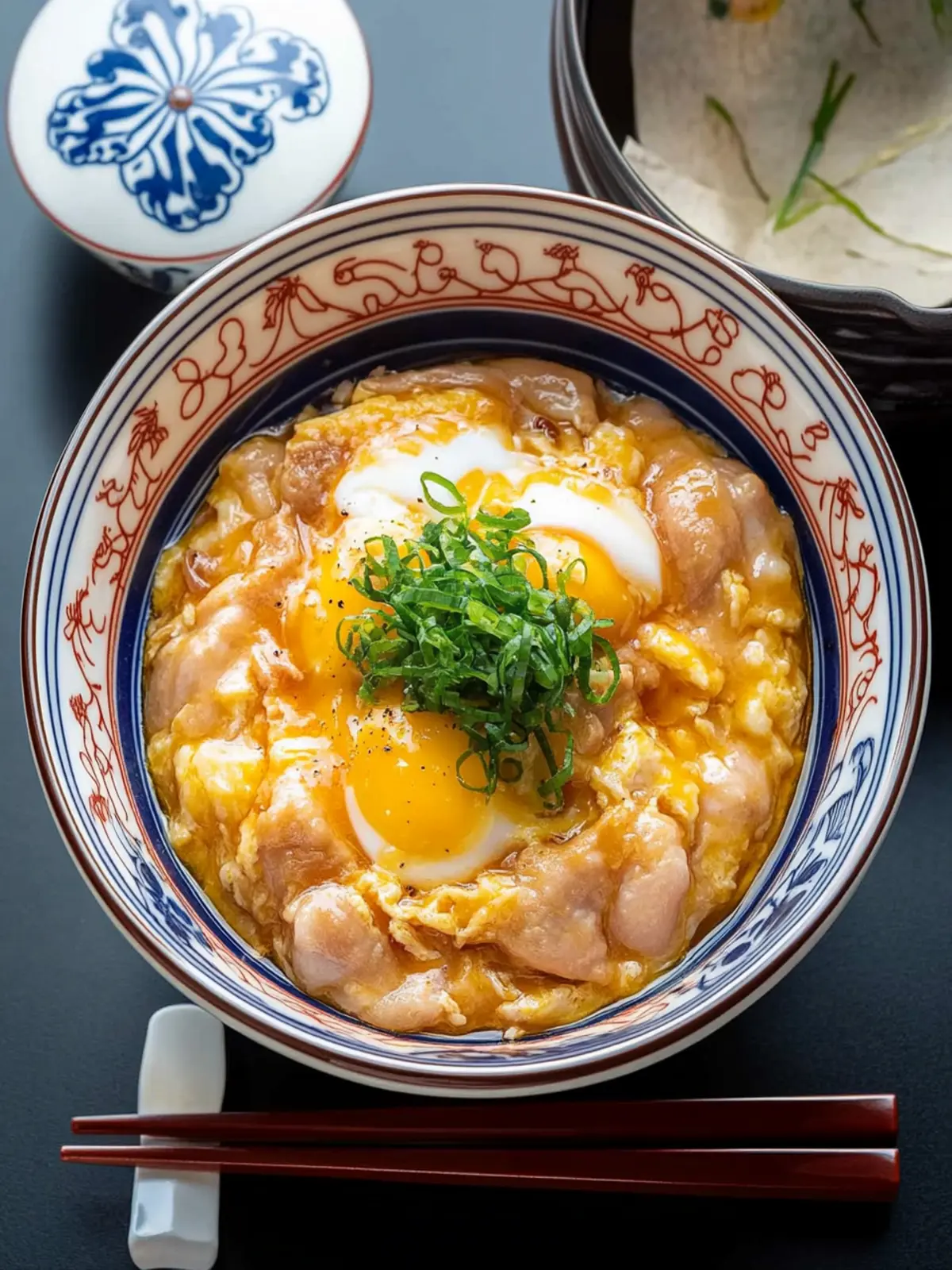
Delicious Oyakodon: Easy Japanese Chicken and Egg Rice Bowl
Ingredients
Equipment
Method
- Cut the chicken into 2-3 cm wide pieces, season with sugar, sake, and salt, then toss with potato starch. Allow to rest for 15-30 minutes.
- Crack the eggs into a bowl and gently cut through the egg whites without whisking.
- In a pan, combine dashi, mirin, sugar, onions, and seasoned chicken. Heat until it simmers, then reduce to medium low.
- Flip the chicken pieces, add soy sauce, and simmer for 2-3 minutes until the chicken is no longer pink.
- Drizzle about 2/3 of the egg mixture over the chicken. Reduce heat and cook uncovered for about 30 seconds.
- Pour in the remaining eggs and add mitsuba if using. Cook for another 10-20 seconds.
- Prepare a bowl of rice, place nori on top, and slide the chicken and egg mixture over it. Add extra yolk and garnish as desired.